How to knit the knit stitch
The knit stitch is the first and most important stitch in knitting. Learn it step by step, Continental style, with the simple "in, pick, through, off" motion, and make your first fabric.
 By Sofia AkramiKnyt Co-founder and editor
The knit stitch is the most basic stitch in knitting, made by pulling a new loop of yarn through an existing stitch. Knit every stitch of every row and you create garter stitch: a soft, squishy, reversible fabric that's ideal for a first project. Once you can knit, you're already most of the way to making a scarf. This guide teaches the Continental style, with the yarn held in your left hand. It's the standard way of knitting across Scandinavia and much of Europe, and often the faster method once learned.
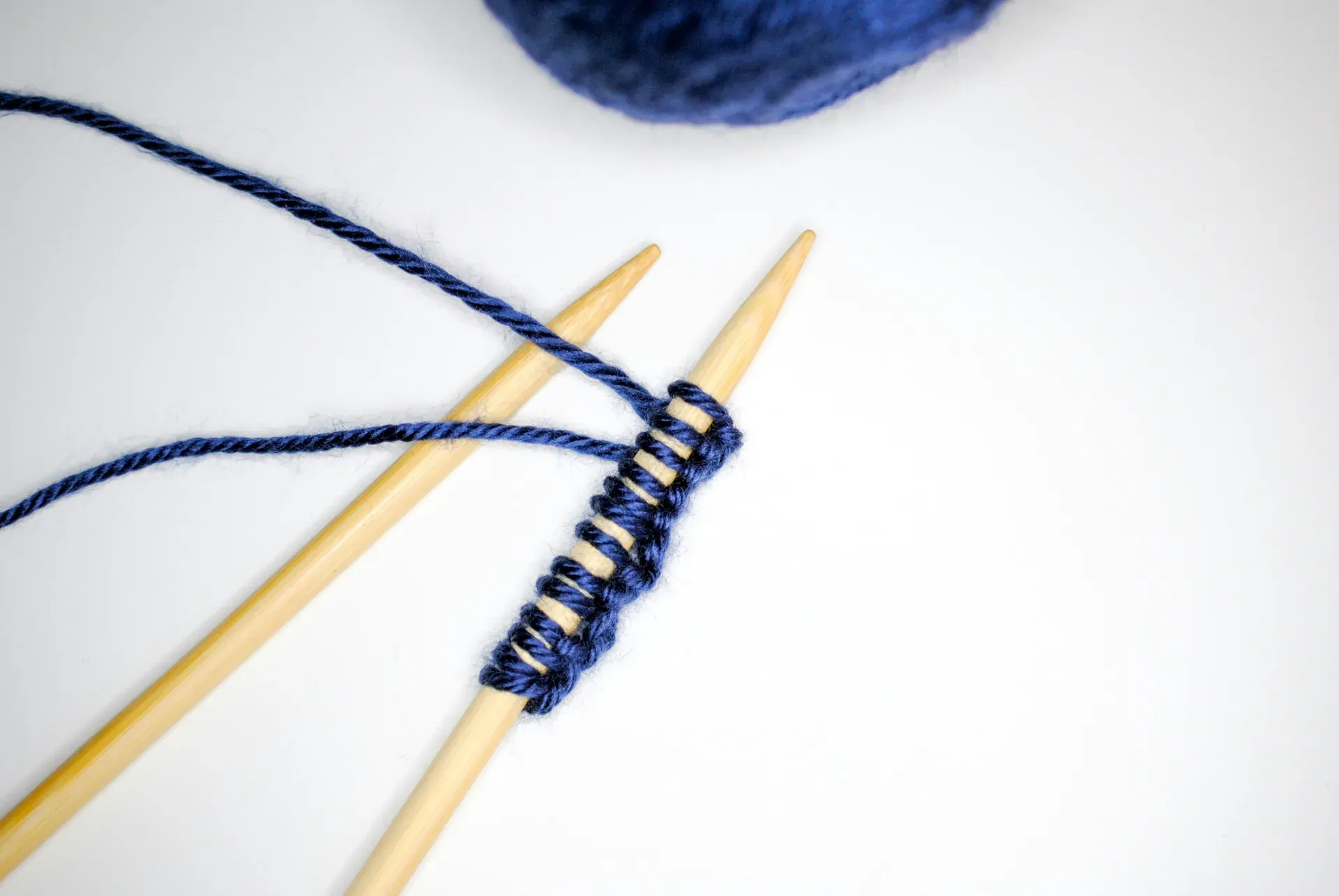
This assumes you've already cast on. Your stitches start on the left needle; the working yarn hangs at the back.
Holding the yarn (Continental)
The working yarn runs over the top of your left index finger, which feeds the yarn and controls the tension. For extra tension, wrap the yarn once or twice around your little finger (or around the index finger itself) first. There's no single correct hold. Adjust the wraps until the yarn feeds smoothly without going slack. Comfort and even tension are what matter.
The knit stitch in four steps
Holding the needle with your cast-on stitches in your left hand (yarn over your index finger, behind the work) and the empty needle in your right:
- In: Insert the right needle into the front of the first stitch on the left needle, from left to right, passing the tip from front to back so it ends up behind the left needle. (The two needles form an X, right behind left.)
- Pick: Move the right needle tip over the top of the working yarn and scoop it (anti-clockwise if you look straight at the needle tip). The needle does the work. Your left index finger just holds the yarn steady.
- Through: Draw the caught yarn back through the stitch, toward you, so a new loop sits on the right needle. If the loop tries to slip off, steady it with the tip of your left middle finger.
- Off: Slide the old stitch off the left needle. The new stitch stays on the right needle.
That's one knit stitch. An easy way to remember it: in, pick, through, off. Repeat across the row. When the row is done, swap the needles (the full one goes back into your left hand) and knit the next row.
What you've made: garter stitch
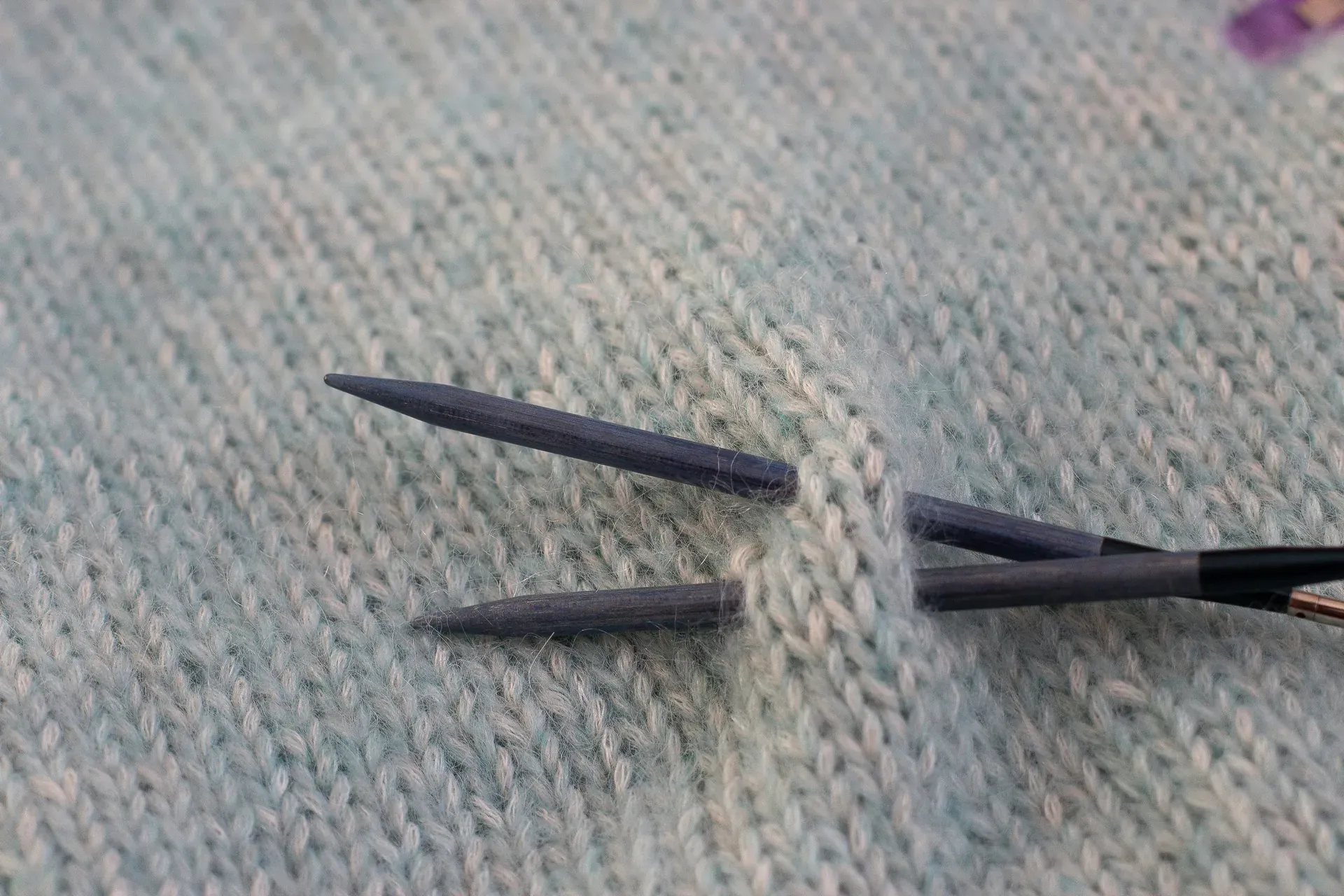
Knitting every row produces garter stitch: horizontal ridges on both sides, a thick and stretchy fabric that lies flat and doesn't curl. It's the easiest fabric to make and perfect for scarves, dishcloths and blankets. → How to knit a scarf
Common beginner mistakes
- Splitting the yarn: the needle goes through the middle of the strand rather than into the stitch. Slow down and aim for the open loop.
- Adding stitches by accident: usually from knitting into the gap between stitches, or not letting the old stitch drop off. Count your stitches at the end of each row.
- Stitches too tight to move: keep them loose enough to slide along the needle.
Frequently asked questions
What is the knit stitch?
It's the fundamental knitting stitch: you draw a new loop of yarn through an existing stitch to build the fabric one stitch at a time. The motion is "in, pick, through, off."
What is the difference between knitting and the knit stitch?
"Knitting" is the craft as a whole; the "knit stitch" is one specific stitch. The other basic stitch is the purl. → Knit vs purl
What can I make knowing only the knit stitch?
Plenty: anything in garter stitch, including scarves, cowls, dishcloths and simple blankets. Many knitters make several projects before learning to purl.
Why does my knitting keep getting wider?
You're accidentally increasing, usually by knitting into the gap between stitches or working the edge stitch twice. Count stitches each row to catch it early.
English or Continental: which way should I hold the yarn?
Both produce identical fabric; they differ only in which hand holds the yarn. This guide teaches Continental (yarn in the left hand, "picking"), the standard style across Scandinavia and much of Europe, and often the faster method once learned. English style ("throwing", yarn in the right hand) works just as well. Patterns don't care which you use.
Co-founder and editor of Knyt. Avid knitter!