German short rows: the double stitch, step by step
German short rows shape knitting with a simple "double stitch" instead of wraps. Learn the method step by step, how to work the DS later, and why knitters prefer it.
 By Sofia AkramiKnyt Co-founder and editor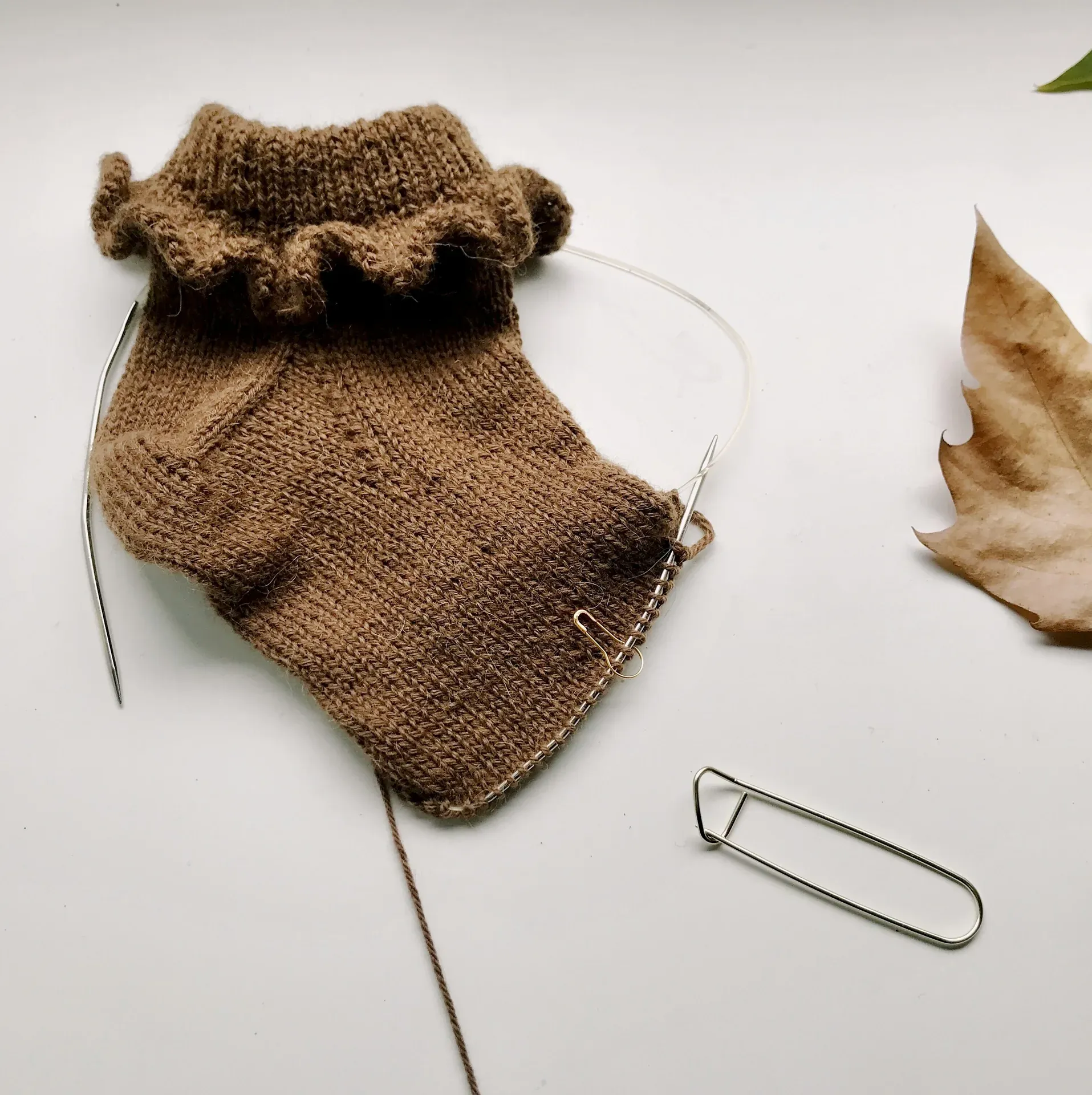
German short rows are a way of turning mid-row to shape your knitting, using a "double stitch" (DS) instead of the wraps used in older methods. You turn, slip the first stitch with the yarn in front, and pull the yarn firmly up and over the needle so the stitch shows two legs. Then you simply work those two legs as one stitch when you come back. No wraps to hunt for and pick up, which is exactly why this has become the modern favourite.
What short rows are for
Short rows are partial rows. You turn around before the end, stacking extra fabric in one part of the work and building three-dimensional shape into flat knitting: sloped shoulders, the raised back neck of a yoke sweater, sock heels, bust darts, curved shirttail hems and crescent shawls.
How to work German short rows
- Work to the turning point given in your pattern. Turn the work.
- Make sure the yarn is at the front, then slip the first stitch purlwise.
- Pull the working yarn up, over the needle and to the back, firmly, until both legs of the slipped stitch stretch over the needle. It now looks like two stitches: that's the double stitch (DS). Firm enough that the legs sit clearly over the needle, not so hard the fabric puckers.
- Position the yarn for the next stitch: purling next? Bring the yarn to the front between the needle tips. Knitting next? It's already at the back. Work the next stitch or two slightly tighter than usual.
- Continue the row as the pattern directs.
Resolving the double stitch
When you later work a full row and reach a DS: work both legs together as one stitch. Knit them together on a knit row, purl them together on a purl row. That's the entire trick. The DS closes into an ordinary stitch and the turn becomes invisible.
Counting rule: a double stitch is one stitch, always. It only looks like two. Miscounting a DS as two is the classic way stitch counts go wrong in short-row sections.
German short rows vs wrap and turn
With wrap and turn (w&t), you wrap the yarn around a stitch at each turn and must later find each wrap and work it together with its stitch, which is fiddly and easy to miss. With German short rows the DS sits visibly on the needle: nothing to hunt for, and the result tends to come out more even. If your pattern is written for w&t, the conversion is simple: work one stitch further than the w&t instruction says, turn, and make a DS.
Common mistakes
- Under-pulling the DS: leaves a hole at the turn. Both legs must sit clearly over the needle.
- Over-pulling: puckers the fabric. Firm, not violent.
- Working only one leg when resolving: creates an extra stitch and a hole. Both legs, together, as one.
- Counting a DS as two stitches: it's one.
- Taking the yarn over the needle instead of between the tips when repositioning for a purl, which makes an accidental yarn over.
Frequently asked questions
What are German short rows?
A short-row method that marks each turn with a "double stitch": the first stitch after turning is slipped and the yarn pulled firmly over the needle so the stitch shows two legs. The DS is later worked as one stitch, closing the turn invisibly.
Are German short rows better than wrap and turn?
Many knitters find them easier and neater: there are no wraps to pick up, the double stitch is clearly visible on the needle, and the finished turns tend to look more even. Both methods produce valid short rows.
How do I knit the double stitch when I come back to it?
Work both of its legs together as a single stitch: knit them together on a knit row, purl them together on a purl row.
Can I use German short rows in the round?
Yes. They're standard for sock heels and yoke shaping worked in the round; the pattern will tell you where to turn.
Do German short rows work in garter stitch?
Yes, and they're particularly invisible there: the DS hides completely among garter bumps.
Co-founder and editor of Knyt. Avid knitter!