How to knit: a complete beginner's guide
New to knitting? Learn the four skills that make up every project: cast on, knit, purl and bind off. Then follow our step-by-step path from first stitch to first scarf.
 By Sofia AkramiKnyt Co-founder and editor
To learn to knit, you only need to master four basic skills: casting on (getting yarn onto the needle), the knit stitch, the purl stitch, and binding off (finishing the edge). Almost every knitting pattern, from a simple scarf to a complex sweater, is built from these four moves. This guide is the starting point: it explains what you need, walks you through each skill in order, and links to a full tutorial for every step.
This is the hub for everything beginner. Work through the steps below in order, and come back here whenever you want the next link in the path.
What you need to start
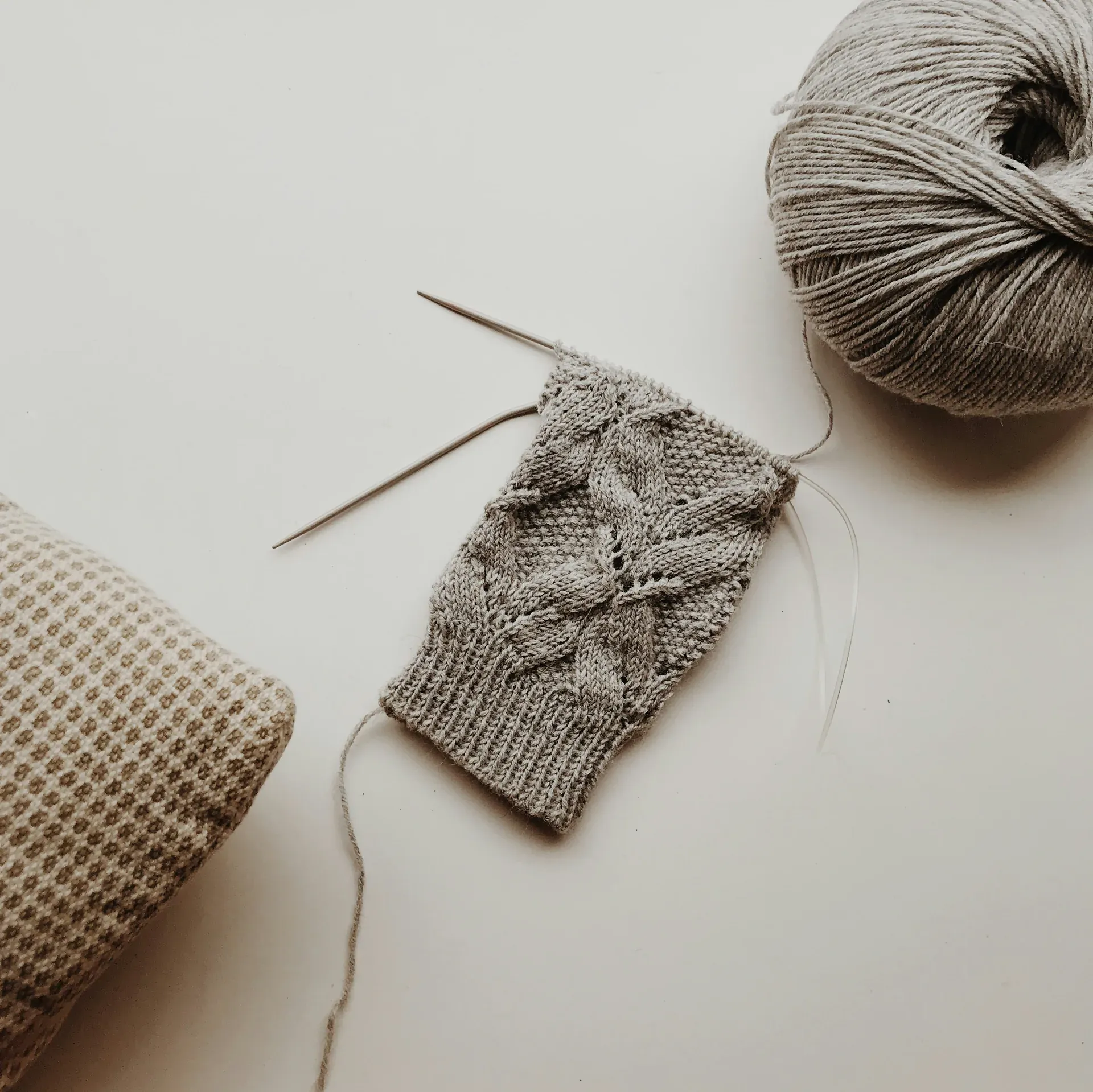
You can begin knitting with just two things: a pair of needles and a ball of yarn. For learning, the easiest combination is a smooth, light-coloured worsted-weight (medium / category 4) yarn and 4.5–5.5 mm (US 7–9) needles, big enough to see your stitches clearly without being clumsy. A darker or fuzzy yarn hides your stitches and makes learning harder.
See the full list, including the one or two notions worth buying, on what you need to start knitting.
The four skills, in order
1. Cast on
Casting on creates your first row of stitches on the needle. The long-tail cast on is the most popular all-rounder and the one most beginners learn first. → How to cast on
2. The knit stitch
The knit stitch is the most basic stitch. Work every row in knit stitch and you get garter stitch, a squishy, reversible fabric that's perfect for a first scarf. → How to knit the knit stitch
3. The purl stitch
The purl stitch is the knit stitch's opposite: the "bump" side. Alternating knit and purl rows gives you smooth stockinette stitch, the classic knitted look. → How to purl
Not sure how these two relate? → Knit vs purl, explained
4. Bind off
Binding off (called "casting off" in the UK) secures your stitches so the work won't unravel when it comes off the needle. → How to bind off
Your first project
The classic first project is a garter-stitch scarf: cast on, knit every row until it's long enough, bind off. It uses only the four skills above and is very forgiving of mistakes. → How to knit a scarf, step by step
Understanding patterns
Once you can make the four moves, the next skill is reading the shorthand that patterns are written in: codes like k, p and k2tog. Two short guides cover it:
Frequently asked questions
How long does it take to learn to knit?
Most people can cast on and work a basic knit stitch within an hour or two. A simple scarf is achievable in your first week. Even tension and faster speed come with practice over a few weeks.
Is knitting or crochet easier to learn?
It's personal, but many beginners find knitting's two needles give neat, structured results quickly, while others prefer crochet's single hook. Both are learnable in a weekend.
What is the easiest thing to knit first?
A garter-stitch scarf or a dishcloth. Both use only the knit stitch and don't need to fit anyone, so mistakes don't matter.
What's the difference between knitting and garter/stockinette stitch?
"Knitting" is the craft; garter and stockinette are fabrics you create with it. Knit every row for garter; alternate knit and purl rows for stockinette.
Do I need expensive equipment to start?
No. A single ball of worsted-weight yarn and one pair of mid-sized needles, often under the price of a coffee and a sandwich, is enough to learn every basic skill.
Co-founder and editor of Knyt. Avid knitter!