What is fingering weight yarn?
Fingering weight is a fine, category 1 yarn, the standard for socks and shawls. Here's its gauge, needle size, what to make with it, and its other names.
 By Sofia AkramiKnyt Co-founder and editor
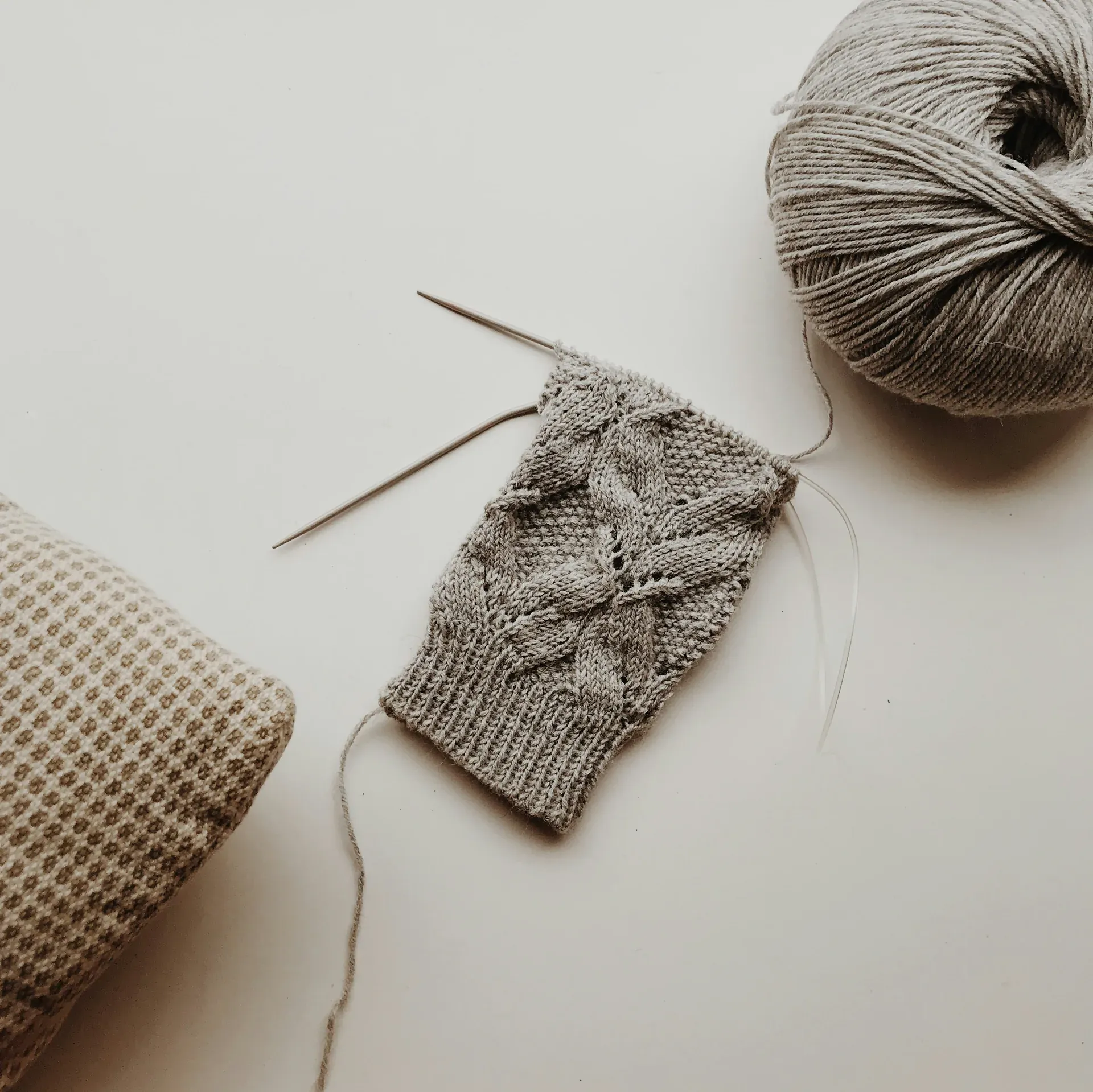
Fingering weight yarn is a fine, category 1 ("super fine") yarn, the standard weight for socks and lightweight shawls. It knits to about 27–32 stitches per 4 inches on 2.25–3.25 mm (US 1–3) needles. Thin and hard-wearing, fingering produces light, detailed fabric and is the go-to for sock knitters.
Fingering weight at a glance
| Spec | Value |
|---|---|
| Category number | 1 (Super Fine) |
| Also called | Sock, baby, 4-ply (UK) |
| Knit gauge | 27–32 sts / 4 in (stockinette) |
| Recommended needle | 2.25–3.25 mm (US 1–3) |
| Recommended crochet hook | 2.25–3.5 mm (US B-1 to E-4) |
| Best for | Socks, shawls, lightweight garments, baby items |
Source: Craft Yarn Council Standard Yarn Weight System.
What to make with fingering weight
Fingering is the sock knitter's staple: fine enough to make a sock that fits inside a shoe, strong enough to survive wear (especially in a wool/nylon blend). It's also ideal for lace and detailed shawls, where the fine gauge shows off stitch patterns, and for delicate baby garments. Larger garments in fingering reward patience with a beautifully light, drapey result.
Names and the UK "ply" system
Fingering goes by several names that all mean roughly the same thickness: sock, baby, and (in the UK) 4-ply. A note of caution on "ply": traditionally it described how many strands were twisted together, but today it's used loosely as a thickness label and doesn't reliably indicate weight on its own: check the category number and gauge. → Full yarn weights chart
Frequently asked questions
What is fingering weight yarn?
A fine, category-1 ("super fine") yarn used mainly for socks and shawls, knitting to about 27–32 stitches per 4 inches on 2.25–3.25 mm (US 1–3) needles.
Is fingering the same as sock weight or 4-ply?
They're used interchangeably for this fine weight. "Sock" emphasises the typical use; "4-ply" is the common UK name. All sit in category 1.
What needle size for fingering weight yarn?
2.25–3.25 mm (US 1–3) is the recommended range. Socks are often knitted at the smaller end for a dense, durable fabric; swatch to match your pattern.
Can beginners use fingering weight?
It's workable but slower and less forgiving than worsted because the stitches are small. Many knitters start with worsted and move to fingering once comfortable.
What's the difference between fingering and lace weight?
Lace (category 0) is even finer than fingering (category 1). Lace is used for openwork shawls on relatively large needles; fingering is sturdier and used for socks and everyday fine knitting.
Co-founder and editor of Knyt. Avid knitter!